Callaway Quantum Max vs TaylorMade Qi4D Max: Which Driver Is Worth Buying?
Two 2026 right-handed, 10.5° regular-flex drivers. One lets you change draw bias; the other lets you move weight front to back.
The buying verdict
If both drivers put roughly the same shots in play, buy the Callaway Quantum Max: its stock build was $200 less at the manufacturers’ US prices on November 8. It is also the first one to try if your usual right-handed miss is right and you want a neutral setting to fall back on. Try the TaylorMade Qi4D Max first if uneven contact costs you carry and you want to compare a rear weight position with a forward one. Pay its premium only if that change helps on your ordinary misses. Keep your driver if neither beats it on the holes you play.
The two builds to put on the fitting sheet
These are complete men’s drivers, one club each. Both stock specifications list 45.75 inches. Our comparison uses manufacturer specifications and US offers checked November 8, 2026; we did not hit these clubs or measure either one’s performance. As an Amazon Associate, we earn from qualifying purchases.

Callaway Quantum Max (2026)
Black, right hand, 10.5°, regular. Project X Denali Frost Silver 50 graphite; Amazon shortens the shaft name to “Denali Silver 50 Gram.” Part 4N271586F200. Headcover included.
- Consider it if
- The buyer whose usual drive leaks right, or whose fitting ends in a tie. Try neutral before moving the weight to draw.
- Trade-off
- Neutral and draw let you compare shot shape; they do not give you the TaylorMade’s front-versus-back weight experiment.
- Skip it if
- Your costly miss is already left and the draw setting is your only reason to change clubs.
Listing checked 2026-11-08. ASIN: B0FRPMV8BL.
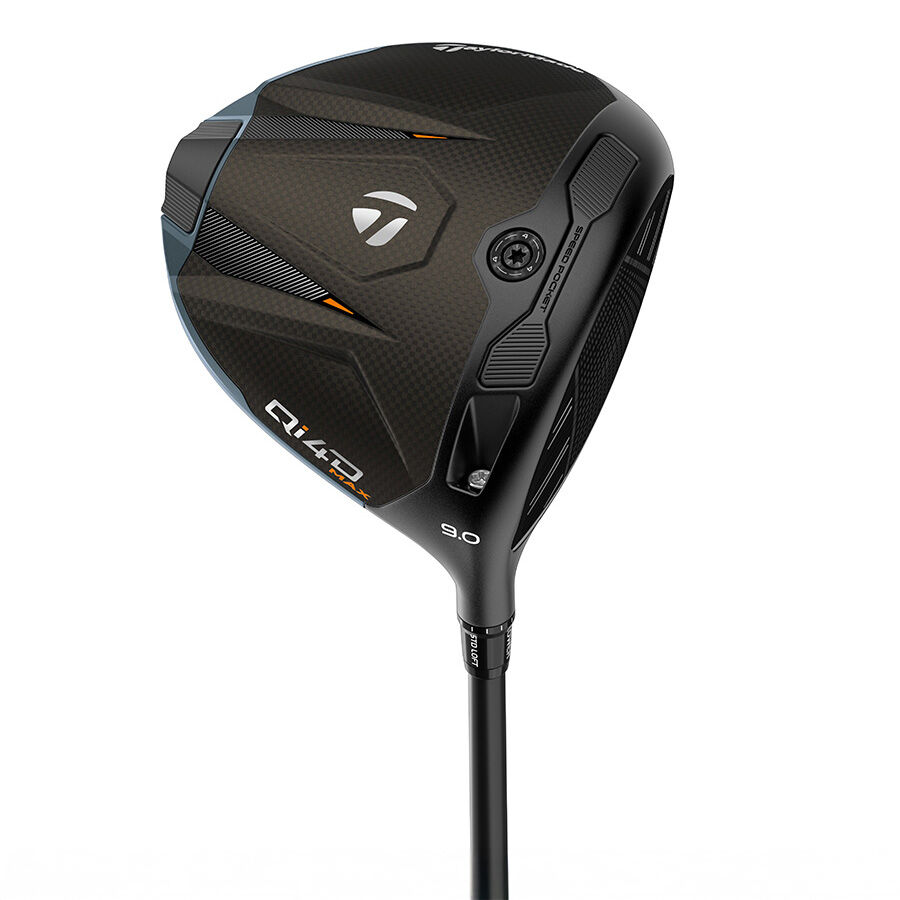
TaylorMade Qi4D Max (2026)
Right hand, 10.5°, regular. Mitsubishi REAX 50 Mid Rotation Blue graphite, factory SKU N2848307. Standard Qi4D Max finish.
- Consider it if
- The golfer who wants to see whether the heavier weight at the back saves playable carry on scattered strikes.
- Trade-off
- Moving that weight forward tests a different flight. Neither position is automatically longer, and this was the more expensive stock build.
- Skip it if
- The rear setting adds no useful carry or control over your current driver, or you need a different shaft or playing length.
Match the 50 MR Blue shaft on the order. The Amazon option we inspected selected 60 MR Blue and its heading said Senior; it is not the factory build above.
What matters before you spend
- •Decide what a better miss looks like before the fitting: clearing your usual forced carry and staying inside your landing area are different jobs.
- •A 10.5° stamp and an R on both shafts do not make this a head-only comparison. Start by comparing the complete clubs you can actually order.
- •Callaway and Amazon both showed $449.99 for the new Callaway. TaylorMade showed $649.99 for its exact stock SKU. These are dated item prices before tax, shipping, trade-ins or fitting fees; check the delivered totals again.
Choose your starting point
Match the row to your situation, then complete the verification step before buying.
| Your situation | Start here | Why | Verify before buying |
|---|---|---|---|
| My usual right miss reaches trouble. | Quantum Max: neutral, then draw. | You can change bias without changing the whole build. | Count right misses rescued AND new left misses. Keep neutral if the trade is worse. |
| My heel or toe misses finish short. | Qi4D Max: heavier weight at the back. | TaylorMade designed that position for stability. | Compare the carry of your usual misses with both your driver and the Callaway. |
| I hit a high flight and want less spin. | Test the Qi4D Max with the heavier weight forward. | It gives you a second setting in the same head. | Record strike and carry. Lower spin is no bargain if your common miss now falls short. |
| Both work, or the budget is tight. | Keep your club if it ties; otherwise start with Callaway. | A tie between the new clubs did not justify the $200 difference at the checked prices. | Compare net cost after any shaft change or fitting, and see the shop’s written return terms. |
What “Max” buys in each head
Think of two different adjustments. Callaway offers neutral or draw weighting: a right-handed player who loses balls right can compare those positions without changing shafts. TaylorMade puts 13 g and 4 g weights in front and rear ports. Start with 13 g at the rear for the stability setting. Reverse them to find out whether the resulting flight works better for you.
A driver can keep a toe strike closer to its normal carry yet still finish in the trees. That is why a forgiveness ranking and a fairway count can point to different clubs. MyGolfSpy’s speed-group comparison and Golf Monthly’s individual reviews are useful counterpoints; none tells you where your particular miss will finish.
A fitting you can take to the first tee
Choose a familiar hole. Write down the carry needed to clear trouble and where the expensive miss is, left or right. Bring your current driver and your usual ball. After warming up, alternate short blocks with all three clubs, using the same tee height and target. Start with Callaway neutral and TaylorMade heavy-back. Record landing side, carry and strike location for every normal attempt, including misses.
Pick the candidate that addresses your problem. Change one weight position on that club only; leave the loft sleeve and shaft alone. Repeat against your current driver, then switch back to the original setting for a final block. If the apparent improvement disappears, book a second trial before spending. Ask the fitter to handle the weights with the correct tool.
Use a simple tally: how many carried the hazard and stayed in play? Note which side the failures went to. A personal best does not outweigh an extra ball out of bounds. This protocol compares two complete builds, not the isolated effect of a shaft or head.
At 95 mph, check the build before blaming the head
If the regular shaft feels hard to time, ask to try an adjacent flex in the same shaft family and head. If you find the middle more often gripping down, ask for a properly built shorter demo. Do not order the standard club on the assumption that cutting it later will reproduce that demo.
On the Callaway order, 50 is the shaft weight class, not a promise about its final cut weight. On the TaylorMade order, “Blue” alone is not enough: match REAX 50 Mid Rotation, regular, and the factory SKU. Both manufacturers offer other configurations. A successful custom fitting is a reason to buy the custom specification, not the closest-looking stock listing.
If the head suits you but both stock shafts feel wrong, use swing speed and tempo to choose two flexes to try before ordering a different build.
What would justify the extra $200?
If the TaylorMade repeatedly carries a hazard on the misses that fall short with Callaway, the premium buys something you can name. If both clear it and finish in the same landing area, the cheaper Callaway is the better new purchase. If your existing club also clears it, the cheapest upgrade is no upgrade.
Ask for a delivered quote for the club you hit, including any shaft or length upcharge, fitting credit and trade-in. For a used offer, check the shaft label, actual playing length, both weight ports or the Callaway weight assembly, headcover and seller’s trial policy. A used club that needs rebuilding is a different comparison. Do not assume an unused-return policy lets you test it outdoors.
Before-you-buy checklist
- 1Take your gamer, usual ball, target carry and a description of the miss that costs you a shot.
- 2Photograph the trial club’s hand, stamped loft, shaft label and flex; record playing length, sleeve and weight positions.
- 3Check the order against Callaway part 4N271586F200 or TaylorMade SKU N2848307. Stop on a different shaft class, flex or head suffix.
- 4Confirm the order is a complete club. Check headcover, adjustment tool, delivered price and permission to hit or return it with that seller.
- 5Buy only if the gain on ordinary shots is worth the net cost over keeping your current club.
Questions that usually come next
Which driver should I try first for a right miss?
Try the Quantum Max in neutral, then draw. If the setting just trades a right miss for a left one, revert. If neither setting makes your usual tee shot playable, spend the next session diagnosing the miss before buying.
Is the Qi4D Max worth $200 more for forgiveness?
Only if you can identify a repeatable benefit. Test the heavy-back setting against your current club and the Quantum Max. Count shots that both clear trouble and stay in play; do not pay for a difference you see only on the best swing.
Does 95 mph mean I should buy regular?
Use regular as one demo, not a prescription. If a different flex or length wins in the fitting, get a quote for that complete build. Neither stock option on this page is a substitute.
Which one should I buy for lower spin?
Test the TaylorMade forward weight position before ordering. Measure carry, strike and landing side along with spin. Keep your current setting if the lower number costs enough carry to put a hazard back in play.
Are the two 50-class shafts interchangeable?
Do not assume so. They are different shaft models in different assembled clubs. Match the manufacturer, family, flex, playing length and compatible adapter to the fitted order; do not move a shaft from one head to the other based on its color.
Can a left-handed player use these links?
The checked builds are right-handed. Both makers list left-hand 10.5° heads, but that needs a separate order and a separate stock check. Ask to hit the left-handed build you would receive.
Should I replace a recent driver if the fitting ends in a tie?
Keep it. Save the results and settings. Revisit the decision when your typical miss, fit needs or delivered prices change enough to give you a reason to switch.
Sources and fact-check notes
We favor manufacturer fitting material for product-specific claims and use independent guides to identify buyer questions. Sources were checked on November 8, 2026.
- Callaway — 2026 Quantum Max driver
US head and shaft configurator, stock length, weight-class note, weighting and direct price. Select regular; the page can initially display stiff.
- TaylorMade — stock Qi4D Max, SKU N2848307
US stock selection and price: right hand, 10.5°, regular, Mitsubishi REAX 50 Mid Rotation Blue. Manufacturer head photos illustrate the model.
- TaylorMade — 2026 Qi4D driver family specifications
The Max section identifies the two weights and the stock MR 50 shaft family. Other heads in the same release use different shafts.
- MyGolfSpy — Quantum and Qi4D by swing speed
Independent test context. Results concern its participants and configurations, not these exact stock builds in your hands.
- Golf Monthly — Qi4D Max fitting observations
The reviewer compared weight positions and recent drivers. This supports including your own driver in the trial, not a universal upgrade claim.
- Golf Monthly — Quantum Max fitting observations
Independent single-reviewer observations on strike and neutral/draw weighting.